|
If your mortgage company has threatened to foreclose on your property
because of your failure to make payments or has actually started a foreclosure
action, you may have to make some quick decisions to save your home.
We hope that the questions and answers presented
here will assist you in familiarizing yourself with mortgage foreclosure issues
and terms. While the material below attempts to answer common questions in this
area, state and local laws may significantly modify the facts set forth.
Because all legal problems are unique, nothing provided here
is a substitute for the advice of competent counsel. We
strongly urge you to consult with an attorney licensed to practice in your
state about any particular legal problem you may have.

WHAT IS MORTGAGE FORECLOSURE?
 If
you fail to make your monthly mortgage payments or in some other way default on
your loan, the Bank or Loan Company that holds the mortgage on your property
may start a legal action to force the sale of your property in order to pay off
the total outstanding balance of the loan. This lawsuit is generally known as
"mortgage foreclosure." If
you fail to make your monthly mortgage payments or in some other way default on
your loan, the Bank or Loan Company that holds the mortgage on your property
may start a legal action to force the sale of your property in order to pay off
the total outstanding balance of the loan. This lawsuit is generally known as
"mortgage foreclosure."
HOW IS A FORECLOSURE ACTION INITIATED?
Generally,
a foreclosure action is initiated by filing a Complaint in Mortgage
Foreclosure with the local court. The Complaint must comply with local rules
regarding form and content. There are usually specific procedures the creditor must follow prior to filing of
the Complaint. Following a successful foreclosure action, the property may be
listed for Sheriff Sale. The length of time that transpires between the filing
of the Complaint and the Sheriff Sale varies depending on your state and county.
DO I GET ANY NOTICE BEFORE I AM SUED?
Your
mortgage company will threaten 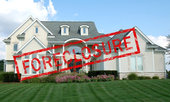 to begin foreclosure
proceedings after you have missed a number of payments. Some states have
requirements that your mortgage company must send you a specific notice of its
intention to begin a foreclosure action. This notice would normally be mailed
to your home, certified mail, return receipt requested, so that the mortgage
company has proof that you received it. However, each state has its own rules
relating to this matter so you should find out whether your state
requires that you be given advance notice. to begin foreclosure
proceedings after you have missed a number of payments. Some states have
requirements that your mortgage company must send you a specific notice of its
intention to begin a foreclosure action. This notice would normally be mailed
to your home, certified mail, return receipt requested, so that the mortgage
company has proof that you received it. However, each state has its own rules
relating to this matter so you should find out whether your state
requires that you be given advance notice.
HOW LONG DO I HAVE TO RESPOND IF I AM SUED IN FORECLOSURE BY MY
MORTGAGE COMPANY?
Depending
on the court rules in your state, after you have been served with the Complaint,
you generally have between twenty (20) and thirty (30) days to respond  legally in a proper written format to a Complaint in Mortgage
Foreclosure. You should carefully read the front page of the Complaint for
information regarding filing deadlines. An "Answer" to the Complaint
must be in writing and must conform to the specific requirements set forth in
local law. DO NOT ASSUME that a letter to the mortgage company or opposing
counsel will take the place of a legally sufficient Answer. legally in a proper written format to a Complaint in Mortgage
Foreclosure. You should carefully read the front page of the Complaint for
information regarding filing deadlines. An "Answer" to the Complaint
must be in writing and must conform to the specific requirements set forth in
local law. DO NOT ASSUME that a letter to the mortgage company or opposing
counsel will take the place of a legally sufficient Answer.
If you do not respond within the
allotted time, the mortgage company may get a default judgment against you.
This means that you have lost your case and the mortgage company can then sell
your property to the highest bidder at auction. You should contact an attorney
at once.
ARE THERE ANY DEFENSES THAT MAY BE RAISED ON MY BEHALF?
Obviously,
if you have been making your  mortgage payments and your
mortgage company has made a mistake, produce copies of your checks or
money orders. In other cases, your mortgage company may not have complied with
all of your state's requirements before beginning the mortgage foreclosure
action so you can challenge the legitimacy of the foreclosure action. In some
circumstances the best thing may be for you to file a bankruptcy to halt the
foreclosure proceedings. mortgage payments and your
mortgage company has made a mistake, produce copies of your checks or
money orders. In other cases, your mortgage company may not have complied with
all of your state's requirements before beginning the mortgage foreclosure
action so you can challenge the legitimacy of the foreclosure action. In some
circumstances the best thing may be for you to file a bankruptcy to halt the
foreclosure proceedings.
DOES A JUDGMENT AGAINST ME ATTACH TO ALL PROPERTIES I OWN?
Generally,
any judgment taken against an individual by any creditor will attach to all of
his or her properties if the properties are in the same name as the judgment. Each judgment will attach based on the order in which
the judgment is obtained. Each creditor may file its action whenever it desires
to do so and does not have to coordinate its action with other creditors. A
judgment by a credit card company can be as valid a lien as another creditor
would obtain. The process for obtaining judgments and liens varies between
jurisdictions as does the effect of the judgment. The ability of a creditor to
obtain a lien might also depend on how the property is titled. Since there may
be legal remedies available for preventing these liens, you should seek legal
representation.
DO I NEED AN ATTORNEY?
Mortgage
foreclosure is a complex area of law which involves numerous documents and verification
of prior payments as well as determining the exact amount of the existing debt.
This complex matter is complicated further by the fact that you are emotionally
caught up in trying to save your home. While some people may try to do this
without the assistance of an attorney, we believe that having an experienced
attorney on your side is well worth the fee.
If you have been sued in mortgage foreclosure in Pennsylvania or New Jersey
a DESSEN, MOSES & ROSSITTO attorney will be happy to
discuss the situation with you. If you have other questions or comments about
the area of Mortgage Foreclosure or any other area in which we practice, please
send us an E-mail message
with your questions or comments and we will be happy to try to assist you. | 

