|
The earlier cancer is diagnosed, the greater the chances of
a cure and the smaller the chance the cancer will reoccur. What rights do you have if your doctor
does not diagnose your cancer as early as possible?
We hope that the questions and answers presented
here will assist you in familiarizing yourself with some of the main issues and
terms associated with a physician's failure to diagnose cancer. While the
material below attempts to answer common questions in this area, state and
local laws may significantly modify the facts set forth. Because all legal
problems are unique, nothing provided here is a substitute
for the advice of competent counsel. We strongly urge you
to consult with an attorney licensed to practice in your state about any
particular legal problem you may have.

WHAT KINDS OF CANCERS GIVE RISE TO MALPRACTICE SUITS?
 Failure
to diagnose any type of cancer may give rise to a lawsuit if the failure results in a
change in the cure or relapse rate. The more common failure to diagnose cancer
claims include prostate cancer, lung cancer, melanoma (a type of skin cancer),
colon and rectal cancer, and gynecologic cancers (ovary, uterus, and cervix). Failure
to diagnose any type of cancer may give rise to a lawsuit if the failure results in a
change in the cure or relapse rate. The more common failure to diagnose cancer
claims include prostate cancer, lung cancer, melanoma (a type of skin cancer),
colon and rectal cancer, and gynecologic cancers (ovary, uterus, and cervix).
MY DOCTOR IGNORED A LUMP IN MY BREAST. I JUST FOUND OUT THAT I HAVE
BREAST CANCER. CAN I SUE HIM FOR MALPRACTICE?
Breast
cancer is one of the most commonly reported medical malpractice claims. A
physician has a duty to examine a patient and evaluate any lumps found by
either the doctor or patient. If your doctor ignores a lump that turns out to
be cancerous, a lawsuit may be successful because the doctor's care would be
below the standard of care.
WHAT TESTS SHOULD A DOCTOR ORDER TO MAKE A DIAGNOSIS?
The
doctor should perform a thorough breast exam by actually touching the patient.
If you discover a lump on routine self-breast exam, you must point it out to
the doctor. 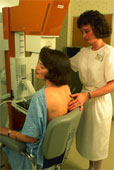 Even if the doctor is unable to feel the mass, he or she should
order a mammography, which is an x-ray. Even if the mammography is negative
(does not show a mass), further testing should be ordered if you are sure that
you feel something different than your usual breast tissue. An MRI and/or an Ultrasound of the
area may show something that mammography did not. Ultimately, the area may need
to be aspirated with a needle in order to get a specimen to examine under the
microscope for cancer cells. Failure to take a patient seriously and order the
appropriate tests in a timely fashion may constitute malpractice if cancer is later
diagnosed. Even if the doctor is unable to feel the mass, he or she should
order a mammography, which is an x-ray. Even if the mammography is negative
(does not show a mass), further testing should be ordered if you are sure that
you feel something different than your usual breast tissue. An MRI and/or an Ultrasound of the
area may show something that mammography did not. Ultimately, the area may need
to be aspirated with a needle in order to get a specimen to examine under the
microscope for cancer cells. Failure to take a patient seriously and order the
appropriate tests in a timely fashion may constitute malpractice if cancer is later
diagnosed.
WHAT WOULD BE THE BASIS FOR A LAWSUIT AGAINST THE PHYSICIAN?
Failure
to order a mammogram, incorrectly reading a mammogram, or relying on a
"negative" mammogram when a mass can be felt are all examples of
physician negligence. Failure to properly evaluate a breast mass is below the
standard of care 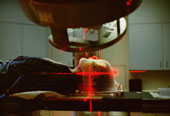 and gives you reason to sue. Generally speaking, the issue is
whether the negligent delay in diagnosis by the doctor would have changed the
patient's survival rate or relapse rate from the cancer. and gives you reason to sue. Generally speaking, the issue is
whether the negligent delay in diagnosis by the doctor would have changed the
patient's survival rate or relapse rate from the cancer.
DO I HAVE TO HAVE AN ATTORNEY?
Yes.
In order to prove negligence, you will need to retain experts to testify on
your behalf about what occurred, from a technical sense. The negligent party
will then retain its own experts to contest everything that you say. The
attorney will be able to help you find experts and cross-examine the other
party's experts as well. It would be most difficult, if not impossible, for a
non-lawyer to handle a failure to diagnose canser malpractice case.
HOW DOES MY ATTORNEY GEY PAID?
Most
attorneys review potential malpractice cases on a contingent or percentage fee
basis. This means that the attorney's fee will be a percentage of the amount
recovered on your behalf. If there is no recovery, then you will not owe any
fee to the attorney. Most attorneys will even advance the expenses needed to
bring the case to trial, and then get reimbursed for those expenses from the
recovery. All of these details regarding the fee and cost arrangements should
be worked out with your attorney in advance, before any work is done on the
case. You should review all of these details completely with the attorney and
have the fee arrangements put into writing.
DESSEN, MOSES & ROSSITTO is happy to
assist you in any legal matter that involves either Pennsylvania or New Jersey,
the two states in which our attorneys routinely practice. If you wish to
contact us for more information concerning this field of law or any other in
which we practice, please send us an E-mail message and we will be
happy to try to assist you.
| 

